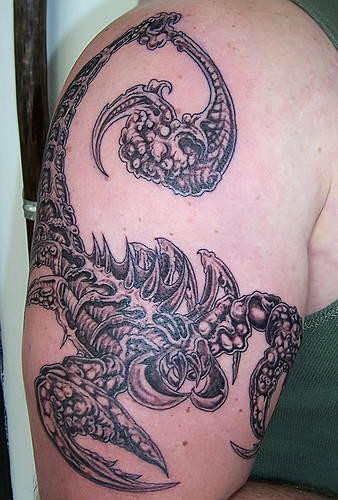
The practice of motorcycle riding is getting more widespread and popular again, so with it biker tattoos are also gaining in popularity. Biker tattoos are associated with rebelling against authority and living life out on the road, although these days biker tattoos are somewhat more acceptable to the general populace as many bikers are not involved with outlaw gangs, but get pleasure from having a traditional cycle club tattoo.

There is variation to the size of many of their tattoos but quite a large percentage of them take up a lot of skin. For those who are only week end bikers, may have only one or two tattoos, but for those whose intensity of commitment reaches stronger proportions, full sleeves or a body suit may signal a hard level of affiliation with the practice of biking.

.
Some motorcycle groups, tattoos, carry special significant meaning of position and rank in the groups and the carrying out of certain tasks and actions in relation to the group. The tattoos can be symbols of loyalty levels, belonging etc.

Much of the time exaggerations are made in reference to rumors concerning outlaw biker gangs, only a very small percentage of people are actually members of outlaw biker groups who have tattoos, but its still understandable people can feel suspicious and somewhat wary of those with bike tattoos due to the connotations of some outlaw groups.

Associations with the underworld and prison are also associated with tattoos, and the archetype of a biker getting a tattoo behind bars with an illegal tattoo kit comes to mind with many. But on the whole the biker tattoo is just a symbol of the energy, excitement and stimulation of a freedom and life out on the road.
As well as symbolizing a persons need to feel individual and away from a crowd at the same time bike club tattoos can symbolize commitment, loyalty and association with an organized biker group and carry symbolic signification of there role in that group.

When a person exhibits with pride a cycle club tattoo,they can be of interest to read and give indications of the person wearing them. The most known and popular motor bike that comes to mind with people is of course the Harley Davidson. Their tattoos are usually striking in appearance and carry many common themes such as attractive woman, spider webs, grim reapers, lions, eagles etc. To round it all off cycle club tattoos are a sign to the world of a persons wish for freedom, excitement and the draw of the open road.


There is variation to the size of many of their tattoos but quite a large percentage of them take up a lot of skin. For those who are only week end bikers, may have only one or two tattoos, but for those whose intensity of commitment reaches stronger proportions, full sleeves or a body suit may signal a hard level of affiliation with the practice of biking.

.
Some motorcycle groups, tattoos, carry special significant meaning of position and rank in the groups and the carrying out of certain tasks and actions in relation to the group. The tattoos can be symbols of loyalty levels, belonging etc.

Much of the time exaggerations are made in reference to rumors concerning outlaw biker gangs, only a very small percentage of people are actually members of outlaw biker groups who have tattoos, but its still understandable people can feel suspicious and somewhat wary of those with bike tattoos due to the connotations of some outlaw groups.

Associations with the underworld and prison are also associated with tattoos, and the archetype of a biker getting a tattoo behind bars with an illegal tattoo kit comes to mind with many. But on the whole the biker tattoo is just a symbol of the energy, excitement and stimulation of a freedom and life out on the road.
As well as symbolizing a persons need to feel individual and away from a crowd at the same time bike club tattoos can symbolize commitment, loyalty and association with an organized biker group and carry symbolic signification of there role in that group.

When a person exhibits with pride a cycle club tattoo,they can be of interest to read and give indications of the person wearing them. The most known and popular motor bike that comes to mind with people is of course the Harley Davidson. Their tattoos are usually striking in appearance and carry many common themes such as attractive woman, spider webs, grim reapers, lions, eagles etc. To round it all off cycle club tattoos are a sign to the world of a persons wish for freedom, excitement and the draw of the open road.